Why a powered surface that periodically offloads tissue is the recommended modality for patients who cannot be regularly repositioned.
"Active surface: These are powered devices designed to periodically redistribute pressure by repeatedly loading and unloading the pressure beneath the body… Unlike reactive surfaces, cyclical pressure redistribution continues even in the absence of patient movement, although the degree of off-loading varies by device."
— Phillips L, Goossens R, Takahashi M, Clark M. Wounds International, Vol 3, Issue 3 (2012)."As each patient presents with a unique and changing risk profile, it is not possible to determine a universally 'safe' pressure-duration threshold… A principal design goal is, therefore, to mimic the protective effect of repositioning by periodically reducing contact with the support surface to a level that is as low as practically achievable for as long as possible. Off-loading cycles ideally occur several times each hour to reduce the risk of ischemia reperfusion injury; a condition associated with vessel occlusion for as little as one to two hours."
— Phillips L, et al. Wounds International, Vol 3, Issue 3 (2012)."Active surfaces, by the very nature of their design, periodically off-load the tissue, meaning that they are considered the modality of choice for patients who cannot be regularly repositioned. Examples might be end-of-life care, intensive care, long-term care where reduced sleep interruption is preferred, or simply patient choice."
— Phillips L, et al. Wounds International, Vol 3, Issue 3 (2012).Integrated evidence from human, animal, and in-vitro studies.
"Severe pressure ulcers and deep tissue injury are associated with higher mortality rates, longer hospital stays, and costly treatment. Time is a critical factor in commonly employed measures (e.g., pressure redistribution for wheelchair users and patient turning schedules) to prevent pressure ulcers and deep tissue injury."
— Ostomy Wound Management. 2008;54(10):26–35."Findings from the three models indicate that pressure ulcers in subdermal tissues under bony prominences very likely occur between the first hour and 4 to 6 hours after sustained loading."
— Ostomy Wound Management. 2008;54(10):26–35."According to current prevention guidelines from the European Pressure Ulcer Advisory Panel (EPUAP), individuals who are able should be taught to redistribute weight every 15 minutes."
— EPUAP prevention guidelines (epuap.org).The True³ Digital System is designed against exactly this clock: it sequentially offloads the body eight times per hour, mimicking the protective effect of repositioning even when the patient cannot move.
NPUAP / NPIAP pressure-injury stages, for clinical reference. The system is indicated for prevention and for Stage I–IV ulcers, as well as post–skin graft / flap care.
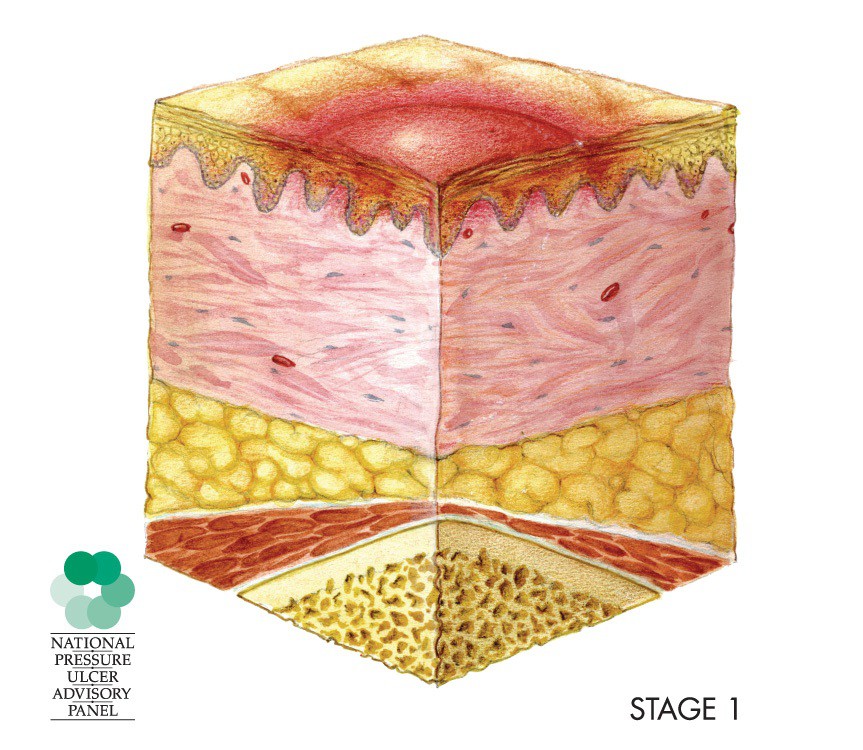
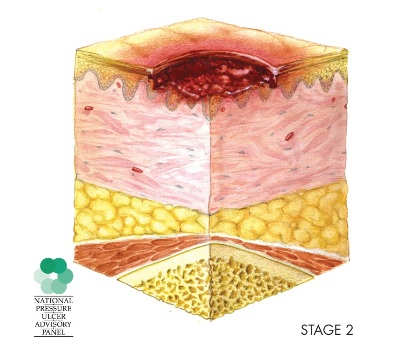
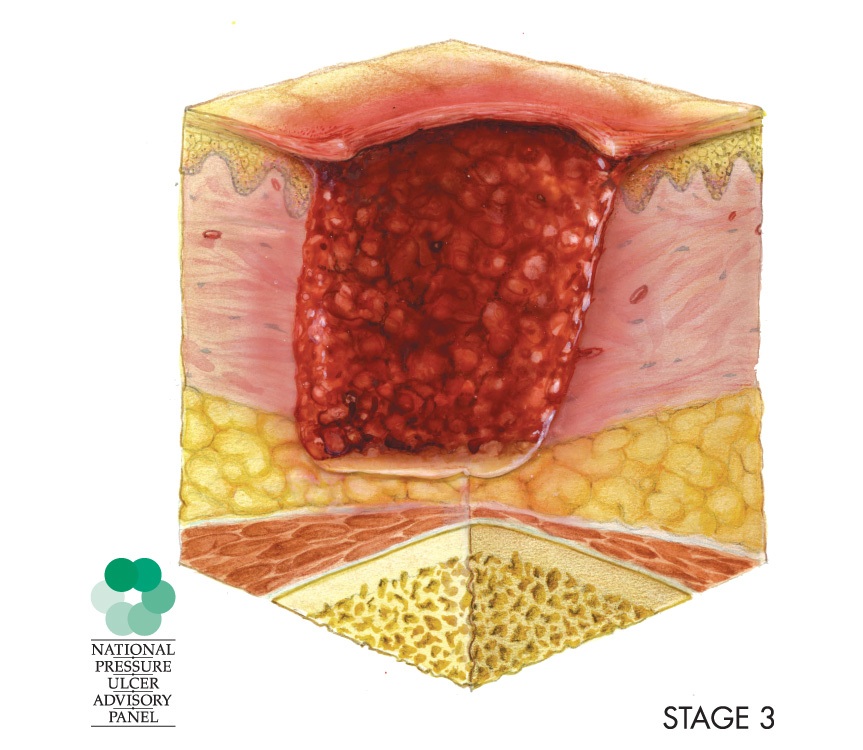
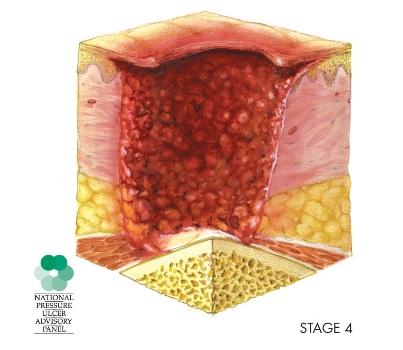
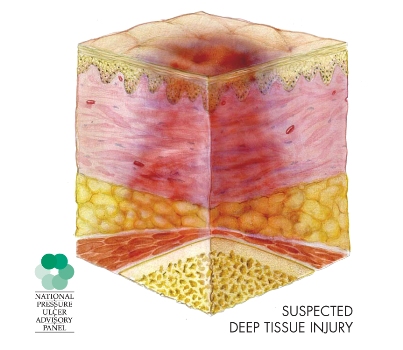
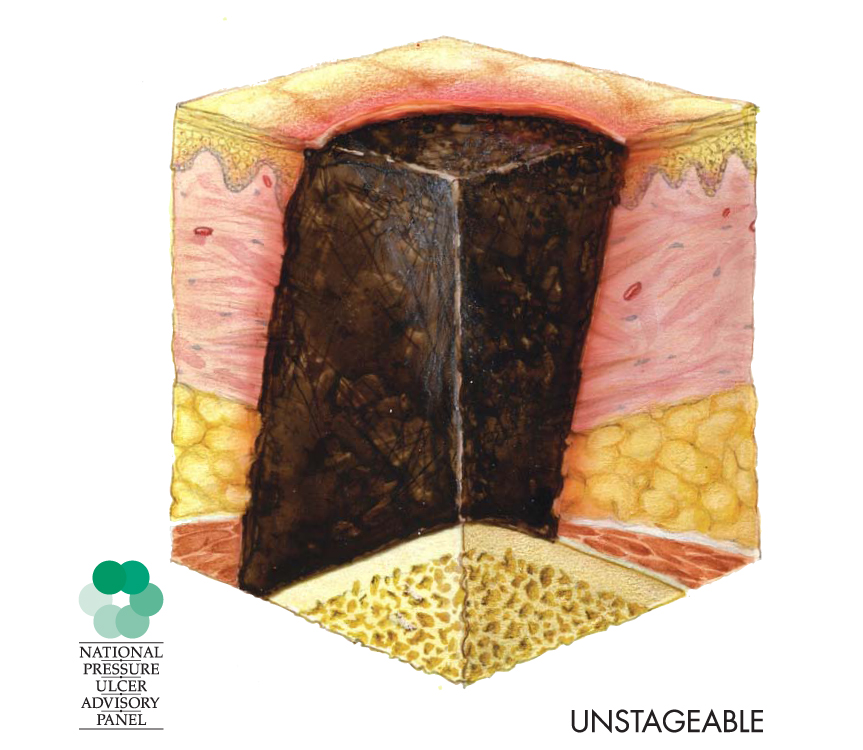
Staging imagery for educational reference. This page is informational and is not a substitute for clinical judgment or a treatment plan.
The TRI-PHASIC cycle, pressure mapping, and the active-vs-reactive distinction.